If you buy and sell goods in the UAE, VAT is part of every transaction you make. It applies when you purchase inventory from suppliers, when you sell products to customers, and when you import goods into the country. Understanding how VAT is calculated is not just a matter of compliance. It directly affects your pricing, your cash flow, and the amount you owe or can recover from the Federal Tax Authority (FTA) at the end of each tax period.
The UAE introduced VAT on 1 January 2018 under Federal Decree-Law No. 8 of 2017 at a standard rate of 5%. While 5% may sound straightforward, the actual mechanics of calculating VAT, filing returns, and staying compliant involve layers of detail that catch many traders off guard, especially those operating in retail and trading, wholesale distribution, food and drinks, and cross-border import/export.
This guide breaks down the VAT calculation process for traders operating in Dubai, Abu Dhabi, and across the wider UAE, with practical AED examples, a clear explanation of input and output VAT, and an overview of the special rules that apply in 2026.
The Basic VAT Calculation: Output VAT Minus Input VAT
At its core, VAT in the UAE works on a simple principle. As a registered trader, you charge VAT on the goods you sell (this is called output VAT) and you pay VAT on the goods and services you purchase for your business (this is called input VAT). The amount you owe the FTA is the difference between the two.
The formula: VAT Payable to FTA = Output VAT (collected from customers) minus Input VAT (paid to suppliers)
Here is a practical example for a trader in Dubai:
- You purchase goods from a supplier for AED 100,000. The supplier charges you 5% VAT, which is AED 5,000. This AED 5,000 is your input VAT.
- You sell those goods to your customers for AED 150,000. You charge them 5% VAT, which is AED 7,500. This AED 7,500 is your output VAT.
- At the end of the tax period, you owe the FTA the difference: AED 7,500 minus AED 5,000 = AED 2,500.
If your input VAT exceeds your output VAT in any period, you can carry the excess forward to the next period or apply for a refund from the FTA. However, under the 2026 VAT amendments, excess input VAT can only be carried forward for a maximum of five years before it permanently lapses. Traders with accumulated VAT credits should review their balances and consider filing a refund request. Our VAT Reconsideration service can assist with refund applications and FTA disputes.
Understanding the VAT Categories That Apply to Traders
Not all goods are taxed the same way. As a trader in the UAE, your products will fall into one of three VAT categories. Applying the correct category to each transaction is essential for accurate VAT calculation and filing. According to the UAE Government’s official VAT guidance, the categories are as follows.
Standard Rated (5%)
Most goods sold within the UAE fall under the standard 5% rate. This includes electronics, clothing, furniture, building materials, automotive parts, consumer products, and the majority of wholesale and retail merchandise. If you are a general trader in Dubai, the bulk of your sales will be standard rated. You charge 5% on the selling price, and you can recover the input VAT paid on purchases related to these sales.
Zero Rated (0%)
Zero-rated supplies are technically taxable, but at 0%. This is important because it means you still charge VAT (at 0%) and can recover input VAT on related purchases. For traders, the most relevant zero-rated categories include exports of goods outside the UAE, the first supply of residential property, and certain basic food items. Zero-rating is especially relevant for traders involved in transport and logistics or those exporting through Jebel Ali Free Zone and other designated zones.
Exempt Supplies
Exempt supplies are not subject to VAT, and importantly, you cannot recover input VAT on purchases related to exempt supplies. For traders, this is less common, but it applies to certain financial services and bare land transactions. If your business handles a mix of taxable and exempt supplies, you will need to apply a partial input VAT recovery calculation. Our Financial Consultancy and Advisory team helps traders structure their VAT recovery to maximize legitimate claims.
VAT on Imports: The Reverse Charge Mechanism for Traders
If you import goods into the UAE, VAT is generally collected at customs. You pay 5% VAT on the declared value of the imported goods at the point of entry, and this amount becomes your input VAT, which you can recover on your next VAT return (provided the goods are used for taxable business activities).
For services imported from outside the UAE, a different mechanism applies. Under the reverse charge mechanism, the trader (as the recipient of the service) is responsible for accounting for VAT on the transaction. From 1 January 2026, under the amendments introduced by Federal Decree-Law No. 16 of 2025, traders are no longer required to issue a self-invoice for reverse charge transactions. Retaining the supplier’s invoice and supporting documents is sufficient.
This simplification is particularly relevant for traders who regularly purchase services from overseas suppliers, such as freight forwarding, international logistics, software licenses, or marketing services. Proper handling of reverse charge entries is a key part of maintaining vat compliance in dubai and across the wider UAE. Our VAT compliance services ensure that reverse charge entries are correctly recorded and reported on your returns.
The Profit Margin Scheme: A Special VAT Calculation for Resellers
In January 2026, the FTA published VAT Guide VATGPM1, which provides detailed guidance on the Profit Margin Scheme. This scheme is especially relevant for traders who deal in second-hand goods, antiques (over 50 years old), and collectors’ items.
Under the standard VAT rules, a trader charges 5% on the full selling price. Under the Profit Margin Scheme, VAT is calculated only on the profit margin, which is the difference between the purchase price and the selling price. This prevents double taxation on goods that were originally purchased from unregistered sellers (where no input VAT was recoverable).
Example:
- You purchase a second-hand item for AED 8,000 from a non-VAT registered seller
- You sell it for AED 12,000
- Your profit margin is AED 4,000
- VAT is calculated on AED 4,000 at 5% = AED 200 (instead of AED 600 on the full selling price)
To use this scheme, you must notify the FTA and maintain specific records documenting the purchase source and eligibility of each item. If your trading business deals in used goods, this scheme can significantly reduce your VAT liability. Our bookkeeping team can help you set up the record-keeping framework required by the FTA for this scheme.
VAT Return Filing: What Traders Need to Know
Every VAT-registered trader in the UAE must file periodic VAT returns through the FTA’s EmaraTax portal. Most traders file quarterly, though businesses with annual turnover above AED 150 million are assigned monthly filing. Returns are due within 28 days after the end of each tax period, as outlined on the Federal Tax Authority’s VAT portal.
Your VAT return summarizes:
- Total output VAT collected on your sales during the period
- Total input VAT paid on your purchases and expenses
- Any adjustments for bad debts, credit notes, or corrections
- The net amount payable to the FTA (or refundable if input exceeds output)
Late filing now attracts a penalty of AED 1,000 for the first occurrence and AED 2,000 for repeated late filings within 24 months, under Cabinet Decision No. 129 of 2025 (effective 14 April 2026). Late payment of VAT carries a 14% annual penalty. Filing accurately and on time is non-negotiable. Our VAT Return Filing service manages the entire process for traders across Dubai and Abu Dhabi, ensuring every return is submitted correctly and before the deadline.
Getting Your VAT Registration Right as a Trader
Before you can charge, collect, or recover VAT, your business must be registered with the FTA. Mandatory registration applies once your taxable supplies and imports exceed AED 375,000 in any rolling 12-month period. Voluntary registration is available from AED 187,500, which can be beneficial for traders who want to recover input VAT on large inventory purchases from early in their operations.
For traders who are just starting out or expanding their product lines, professional vat registration services ensure that your application is submitted correctly, your TRN is issued without delays, and your invoicing and accounting systems are configured from day one. Our VAT Registration and Deregistration service handles the end-to-end process, including registration amendments if your business activities change over time.
Traders planning to set up a new entity in the UAE, through a Freezone or Mainland license, should also coordinate their VAT registration with the incorporation process. Our Business Setup services work alongside our tax team to ensure compliance is built in from the start.
Preparing for E-Invoicing in 2026 and 2027
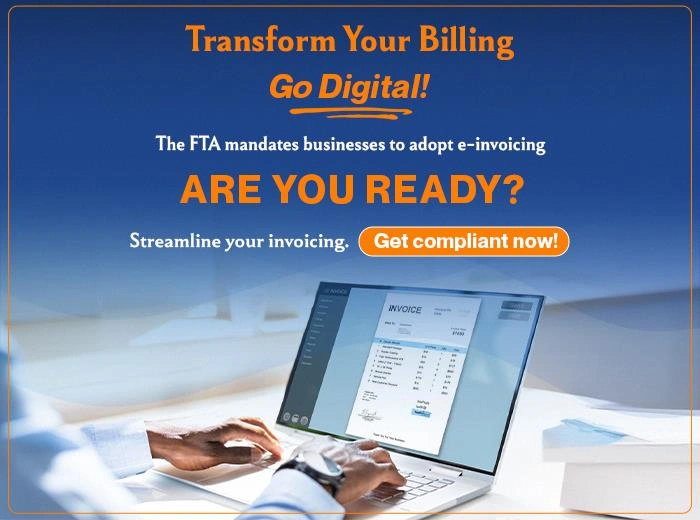
The UAE has mandated electronic invoicing under Ministerial Decisions No. 243 and 244 of 2025. The voluntary phase for B2B and B2G transactions begins in July 2026, with mandatory compliance rolling out from 2027 based on business size. For traders, this means every sales invoice, purchase invoice, and credit note will eventually need to be generated, transmitted, and stored in structured digital formats.
Traders who start preparing now, by upgrading their accounting software and working with an e-invoicing ready service provider, will avoid the operational disruption that comes with last-minute system changes. Asad Abbas & Co., with over 10 years of UAE experience and a team of 40+ qualified professionals (CPAs, CGMAs, CMAs), helps traders across 14+ industries transition to compliant digital invoicing systems.
For traders who also need to manage Corporate Income Tax obligations alongside VAT, having a single firm handle both tax streams ensures consistency between your financial statements, VAT returns, and corporate tax filings. This integrated approach reduces the risk of discrepancies that could trigger an FTA audit.
Conclusion
VAT calculation for traders in the UAE goes well beyond applying 5% to a selling price. It involves understanding the interplay between output and input VAT, correctly classifying each supply as standard rated, zero rated, or exempt, handling reverse charge entries on imported services, and leveraging schemes like the Profit Margin Scheme where applicable. With the 2026 amendments introducing a five-year cap on VAT credit carry-forwards, a revised penalty regime, and the approach of mandatory e-invoicing, traders who stay ahead of these changes will protect their margins and avoid costly compliance failures. If your trading business in Dubai, Abu Dhabi, or anywhere in the UAE needs support with VAT calculation, filing, or compliance, contact Asad Abbas & Co. to work with an FTA Approved Tax Agent who understands the specific challenges traders face.
Frequently Asked Questions (FAQs)
1. How is VAT calculated on goods sold by a trader in the UAE?
VAT is calculated at 5% on the selling price of most goods in the UAE. If you sell a product for AED 10,000, you charge AED 500 as VAT, making the total invoice AED 10,500. This AED 500 is your output VAT. At the end of the tax period, you subtract the input VAT you paid on your purchases from your output VAT and remit the difference to the FTA. If your input VAT exceeds your output VAT, you can carry the balance forward or apply for a refund. The calculation is straightforward for standard-rated goods, but traders dealing with a mix of standard, zero-rated, and exempt supplies need to track each category separately. Maintaining accurate records through professional bookkeeping services ensures your VAT calculations are always correct.
2. What is the difference between output VAT and input VAT for UAE traders?
Output VAT is the tax you collect from your customers when you sell goods. Input VAT is the tax you pay to your suppliers when you purchase goods or services for your business. The net VAT you owe the FTA is your total output VAT minus your total input VAT. For example, if you collected AED 15,000 in output VAT and paid AED 10,000 in input VAT during a quarter, you owe the FTA AED 5,000. Both amounts must be accurately recorded and reported on your VAT return. Errors in either direction can trigger FTA penalties or result in overpayment of tax.
3. Do traders in the UAE need to charge VAT on exports?
Exports of goods from the UAE are zero-rated, meaning VAT is charged at 0% rather than the standard 5%. This is beneficial for traders because you can still recover the input VAT on purchases related to those exports. However, you must maintain proper export documentation, including shipping records, customs declarations, and proof that the goods have physically left the UAE. Without this documentation, the FTA may reclassify the supply as standard rated and assess the 5% VAT plus penalties. Traders involved in cross-border trading should work closely with their VAT compliance advisors to ensure export documentation meets FTA requirements.
4. What is the Profit Margin Scheme and can any UAE trader use it?
The Profit Margin Scheme allows eligible traders to calculate VAT only on the profit margin (selling price minus purchase price) rather than on the full selling price. It applies specifically to second-hand goods, antiques over 50 years old, and collectors’ items that were purchased from non-VAT registered sellers or where input VAT was blocked. The scheme is optional, but traders must notify the FTA and meet specific eligibility and documentation requirements. It is particularly useful for businesses dealing in used electronics, pre-owned vehicles, antique furniture, or vintage collectibles. For traders not dealing in these categories, the standard VAT calculation method applies. Our VAT services team can advise on eligibility and handle the FTA notification process.
5. When are VAT returns due for traders in the UAE?
Most traders in the UAE file quarterly VAT returns, with each return due within 28 days after the end of the tax period. For example, if your tax period covers January to March, your return is due by 28 April. Traders with annual turnover above AED 150 million may be assigned monthly filing by the FTA. Late filing penalties under the revised regime (effective 14 April 2026) start at AED 1,000 for the first occurrence and increase to AED 2,000 for repeat offences within 24 months. Late payment attracts a 14% annual penalty. Professional VAT return filing support ensures you never miss a deadline.
6. How do the 2026 VAT amendments affect traders in the UAE?
The 2026 amendments under Federal Decree-Law No. 16 of 2025 introduced three changes that directly affect traders. First, the reverse charge self-invoicing requirement has been removed, simplifying compliance for traders who import services. Second, excess input VAT can now only be carried forward for five years before it lapses permanently, meaning traders must actively manage their VAT credit balances. Third, the FTA can now deny input VAT recovery if a supply is connected to tax evasion and the trader should have known about the issue. This makes vendor verification a critical compliance step. Our Financial Consultancy and Advisory team helps traders across Dubai and Abu Dhabi navigate these changes with confidence.
 Go Back