Sound financial records are no longer a back-office concern for UAE businesses. With Corporate Tax now in full effect, VAT audits becoming more frequent, and Federal Tax Authority scrutiny tightening across sectors, the quality of your books directly shapes compliance risk, cash flow, and access to funding. Businesses that treat bookkeeping as a monthly afterthought often scramble during filings or investor due diligence. Those that treat it as a continuous discipline move faster, plan better, and pay fewer penalties. This guide explains what professional bookkeeping looks like in the UAE in 2025 and 2026, what regulators expect, and how to structure your finance function so the numbers actually work for you.
Why Bookkeeping Matters More Than Ever in the UAE
The regulatory picture has shifted quickly. Corporate Tax at 9 percent applies to taxable income above AED 375,000, VAT at 5 percent continues across most goods and services, and the Domestic Minimum Top-up Tax for large multinationals introduced in 2025 has raised documentation expectations further. According to the Federal Tax Authority, taxable persons must retain accounting records and supporting documents for at least five years, and up to seven years for real estate.
Clean books also underpin decisions banks, investors, and buyers rely on. Loan applications typically require reviewed or audited financials for the previous two to three years. Several freezones now confirm maintenance of books during renewal. Even routine matters such as visa quota expansions and government tender participation depend on current financial statements. In this environment, bookkeeping is the underlying data layer that touches tax, banking, licensing, and strategy.
Core Components of Professional Bookkeeping in the UAE
Strong bookkeeping in the UAE goes beyond entering invoices into software. Several disciplines need to run in sync each month.
Daily Transaction Recording
Every sale, purchase, expense, and bank movement should be captured with correct classification, tax code, and supporting document. A consistent chart of accounts is what makes month-end usable.
Bank and Cash Reconciliation
Reconciling every bank, credit card, and petty cash account against statements catches missing entries, duplicates, and unauthorised transactions early. In multi-currency operations, this also ensures FX gains and losses are recorded correctly.
Accounts Payable and Receivable
Supplier invoices need to be booked, matched to purchase orders, and scheduled for payment. Customer invoices need aging reports so collections stay predictable. This is often where cash flow problems start.
Tax-Ready Records
Records must support accurate VAT returns and Corporate Tax computations. That means clean tax coding, proper treatment of designated zone transactions, and retention of tax invoices in the format the FTA prescribes. Professional accounting and bookkeeping services tie these components into a repeatable close cycle.
How Bookkeeping Supports Corporate Tax and VAT Compliance
The Corporate Tax regime introduced under Federal Decree-Law No. 47 of 2022 requires taxable persons to prepare financial statements in line with IFRS, or IFRS for SMEs where thresholds apply. Without well-maintained books throughout the year, producing compliant statements at year-end becomes expensive and error-prone.
For VAT, day-to-day records determine whether returns reconcile with supporting documentation. Common issues surfacing in FTA reviews include mismatches between the return and general ledger, missing tax invoices, incorrect treatment of zero-rated and exempt supplies, and reverse charge errors on imports. Each usually traces back to weak record keeping, not a single filing mistake. Businesses using structured corporate tax compliance support tend to close faster and respond to FTA queries with confidence, avoiding penalties that begin at AED 10,000 for record-keeping failures under Cabinet Decision No. 40 of 2017 and its amendments.
Bookkeeping for Freezone vs Mainland Businesses
Freezone entities seeking Qualifying Free Zone Person status face additional documentation demands. Qualifying income needs to be clearly separated from non-qualifying income, transfer pricing files may apply, and substance requirements must be evidenced. Casual bookkeeping does not survive this level of scrutiny. Mainland businesses face the same VAT and Corporate Tax registration obligations, plus economic substance considerations for relevant activities. In both cases, the finance function should reflect the legal structure. Group entities, branches, and related party transactions must be traceable in the ledger, not reconstructed later.
Signs Your Business Needs Professional Bookkeeping Support
- Month-end close takes more than two weeks or is skipped
- VAT returns are prepared from spreadsheets rather than the accounting system
- Bank accounts have not been reconciled for over a month
- Directors cannot answer basic questions about gross margin or cash runway
- Auditors ask for the same information every year because records are hard to locate
- Expansion into new products or markets is planned without a clear financial baseline
Any two of these together is usually the point to bring in dedicated support.
Choosing the Right Bookkeeping Partner in the UAE
The right partner is not a data entry provider. Look for qualified accountants who understand Corporate Tax and VAT, industry experience, familiarity with platforms such as Zoho Books, QuickBooks, Xero, Tally, and Sage, and the ability to scale from bookkeeping into management reporting and advisory. For regulated sectors, an added advantage is working with a firm that also delivers audit and assurance services, so books are maintained with audit readiness built in rather than reworked at year-end.
Quick Reference Checklist
- Record every transaction with correct tax coding within 48 hours
- Reconcile all bank and credit card accounts monthly
- Retain tax invoices and supporting documents for at least five years
- Close books within ten working days of month-end
- Produce a monthly P&L, balance sheet, and cash flow report
- Confirm IFRS alignment for Corporate Tax purposes quarterly
Conclusion
Well-run bookkeeping turns a UAE business from reactive to proactive. It sits underneath every tax filing, every audit, every funding conversation, and every strategic decision leadership makes. Treating it as a strategic function rather than a compliance chore separates businesses that scale smoothly from those that stall at every regulatory checkpoint.
Asad Abbas & Co. Chartered Accountants LLC brings more than ten years of on-the-ground UAE experience to this work, backed by a team of over 40 qualified professionals including CPA, CGMA, CMA, CFM, and MBA holders. As an FTA Approved Tax Agent, RERA Registered Auditor, Freezone Listed Auditor, and Ministry of Justice registered firm, we have supported over 5,000 clients and completed more than 1,000 audits across 14 plus industries. Speak with our team to review your current books, or request a tailored proposal for bookkeeping services in Dubai and across the UAE.
Frequently Asked Questions
How long must UAE businesses retain bookkeeping records?
Businesses in the UAE must retain accounting records, supporting documents, and tax invoices for a minimum of five years from the end of the relevant tax period, as prescribed by the Federal Tax Authority. Real estate related records must be kept for at least seven years. The retention obligation applies to both Corporate Tax and VAT records and covers physical and electronic formats. Records should be organised and retrievable on request, since the FTA can call for them during audits, reconsideration processes, or refund reviews without extended notice, and failure to produce them can trigger administrative penalties.
Is bookkeeping mandatory for small businesses in the UAE?
Yes. Every taxable person in the UAE must maintain proper books of account under Corporate Tax and VAT law, regardless of turnover. Small Business Relief under Corporate Tax does not remove the record-keeping obligation. Businesses below the VAT registration threshold still need to track revenue to know when they cross the mandatory limit of AED 375,000. Proper bookkeeping also supports bank account maintenance, trade license renewal in several jurisdictions, and visa quota approvals, which makes it a practical requirement long before it becomes a tax question.
What is the difference between bookkeeping and accounting?
Bookkeeping is the systematic recording, classification, and reconciliation of daily financial transactions. Accounting builds on that foundation to produce financial statements, tax computations, management reports, and analysis that inform decisions. In practice the two overlap, and most UAE businesses need both. Bookkeeping ensures the underlying data is accurate and complete. Accounting interprets that data for compliance, reporting, and strategy. A firm offering both under one roof typically delivers a more consistent close cycle, fewer reconciling items at year-end, and a smoother handover into audit.
Can bookkeeping be outsourced in the UAE?
Yes, outsourced bookkeeping is common and fully permitted in the UAE. Many small and mid-sized businesses outsource to reduce fixed costs, gain access to qualified accountants, and maintain continuity when internal staff leave. Outsourced providers typically work on cloud platforms such as Zoho Books, QuickBooks, Xero, or Tally, which allow real-time visibility for owners and managers. Choosing a licensed accounting firm rather than an unregulated freelancer is important, since only regulated firms can support you through FTA correspondence, tax registration, and audit related matters end to end.
Does the FTA require specific bookkeeping software in the UAE?
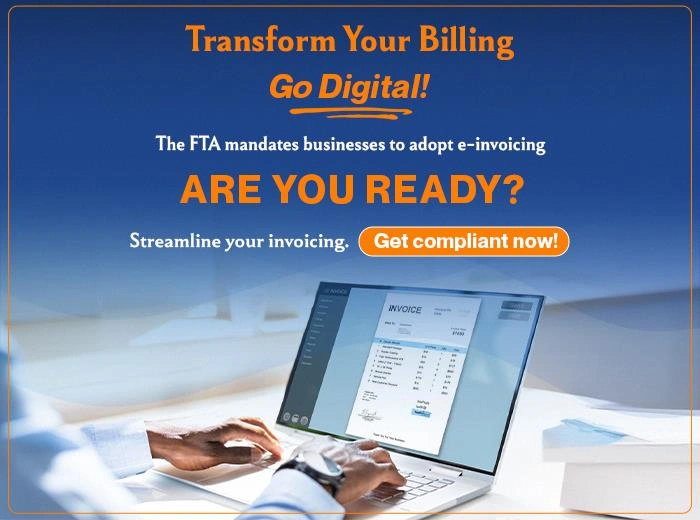
The Federal Tax Authority does not mandate a specific software brand, but records must be accurate, complete, retrievable, and structured to support VAT and Corporate Tax reporting. Any software that produces sequentially numbered tax invoices, tracks input and output VAT correctly, allows reconciliation, and stores supporting documents can be used. Popular choices include Zoho Books, QuickBooks, Xero, Tally, and Sage. With the phased UAE e-invoicing rollout underway, choosing software with e-invoicing compatibility is increasingly important for businesses that will fall inside scope.
 Go Back