
Top Benefits of Outsourced Bookkeeping and Accounting Services

Many small businesses face common accounting challenges, like a lack of expertise, inconsistent cash flow and problems with payroll. Bookkeeping, in particular, requires careful attention to detail and consumes a significant amount of time. To make things easier, many businesses are now using outsourced bookkeeping and accounting services.

Outsourcing these tasks helps solve these issues as it gives the business access to a skilled team that ensures everything is done accurately and on time. Outsourced accounting is when a business hires an outside firm to handle all its accounting tasks. It allows the business to focus on what it does best while leaving important tasks like financial reporting, payroll, bookkeeping and tax filing to experts.

By outsourcing, companies can get professional help without the cost of hiring full-time staff. Moreover, it can also help businesses stay on top of tax rules and make better decisions based on up-to-date financial data.

What are the benefits of outsourcing accounting services?

Here are some key reasons why outsourcing your bookkeeping is a smart choice for your business:

Improved productivity

Outsourcing accounting services allows businesses to focus on what they do best by handing over financial tasks to experts. Tasks like managing daily finances, staying compliant and keeping accurate records can take up a lot of time.

By outsourcing these responsibilities, your team can focus on key activities that help grow the business and boost profits, which ultimately leads to higher productivity.

Save money with outsourced services

A major reason to outsource bookkeeping is the potential for cost savings. Hiring full-time in-house bookkeepers comes with expenses like benefits, salaries, training and other costs. In contrast, outsourcing offers flexible pricing, meaning you only pay for the services you need. This flexibility is especially helpful for small and medium-sized businesses that do not need full-time bookkeeping staff.

Adaptability to business growth

As your business expands, your bookkeeping needs will change. Outsourced bookkeeping services give you the flexibility to adjust the level of support you need, whether it is for a busy season or long-term growth.

It means you do not have to worry about hiring or training new staff as your needs grow or shrink. The service can easily adapt to fit your business.

Use of cutting-edge tools and technology

Outsourcing bookkeeping gives you access to top-notch software and technology that BPO firms invest in. You do not have to worry about buying or maintaining these tools yourself. These advanced systems improve the accuracy and speed of financial reporting, which helps you make better business decisions. 

Reducing risk

Outsourcing your accounting can help protect your business from financial risks. With professionals handling your financial information, the chances of mistakes or fraud are greatly minimized. The best accounting firms often have strong systems in place for monitoring and preventing fraud, which gives your business an added layer of security. 

Expert knowledge at your fingertips

By outsourcing, you get access to experts with specialized skills that might not be available within your company. These experienced accountants keep up with the latest tax rules and regulations to make sure your financial practices are both compliant and efficient. Their expertise helps you avoid expensive mistakes and improves the accuracy of your financial reports. 

Better security and privacy

Managing sensitive financial data in-house can leave businesses vulnerable to risks like data fraud or breaches. Top accounting firms use strong security measures, such as encryption and restricted access, to protect your information. This added security helps prevent potential legal and financial issues for your business.

Better control over cash flow

Outsourcing accounting helps businesses keep a closer eye on their cash flow. Experienced accountants can set up systems to track income and expenses accurately to give you up-to-date information about your finances. This clearer view allows you to make quick decisions, avoid cash flow problems and create more accurate budgets. 

More time for what matters most

Last but not least, outsourcing bookkeeping lets you focus on what really matters, which is: growing your business. By handing over financial tasks to professionals, you can spend more time on things like planning, marketing and other activities that bring in money. This shift can boost your productivity and help your business grow. 

Also Read: Why Every Business in the UAE Should Consider a Financial Audit

How to choose the right firm for outsourcing accounting?

Picking the right firm for outsourcing your accounting is key to keeping your finances in order:

  • Start by figuring out exactly what services you need. Knowing your requirements will help you find a firm that matches your business goals.
  • Next, think about the pricing. Some firms charge by the hour, while others use a monthly fee. Choose the pricing model that fits your budget and provides the best value for the services you will get.
  • It is also important to look for a firm with experience in your industry. Make sure they have a solid track record and understand the financial needs specific to your business. 
  • Lastly, make sure the firm takes data security seriously. They should follow strict security practices, like encryption and regular audits, to protect their financial information. 

Conclusion

Outsourcing accounting is a cost-effective way for small businesses to improve their financial processes, run more efficiently and reduce mistakes. However, choosing the right accounting partner is key to getting the most out of this arrangement and helping the business grow.

With the best accounting partner, like Asad Abbas & Co., you can gain financial clarity and stability, which will eventually set you up for long-term success. So, choose wisely and watch your business grow.
The Ultimate Guide to Applying a Tax Registration Number (TRN) in the UAE

Innovation is driving the world forward, and many enterprises have already established their businesses in the UAE. As a business owner in the UAE, it is important to follow local tax laws. The UAE tax system has changed a lot in recent years. Since the introduction of Value Added Tax (VAT) in 2018, businesses must have a unique identifier called a Tax Identification Number Dubai.

This number helps the authorities keep track of your business for tax purposes. Without a TRN, your business could face fines, delays or even be unable to operate. That is why it is important to register for one.

If you are an entrepreneur unsure about how taxes work in the UAE, worry not. We have got the answers! In this blog, we will discuss what is TRN number and how to apply for tax identification number. So, let us begin!

What is a UAE Tax Identification Number?

Dealing with taxes can be tough, especially since compliance is mandatory, and even small mistakes can result in penalties. In the UAE, getting a Tax Registration Number (TRN) is more than just a formality.

It is a crucial requirement for businesses to legally operate under the Value Added Tax (VAT) system. Without a TRN, businesses cannot issue VAT invoices, claim tax refunds or meet the regulations set by the Federal Tax Authority (FTA).

A tax identification number Dubai is a special code given to businesses for identification purposes. To get this number, a company must first be legally registered. When you register for VAT, the Federal Tax Authority in the UAE will provide a 15-digit TRN that identifies your business. This number allows the FTA to track and manage taxable transactions more effectively and is also needed for various official documents.

The business receiving this number is called the “registrant”. Once registered for VAT, the TRN will be automatically assigned to you. However, applying for a TRN can feel overwhelming as many businesses face challenges with unclear eligibility rules, errors in the application process and complex documentation.

What documents are needed for TRN registration?

You need to submit several documents to relevant authorities for verification to apply for a TRN. This includes your registered email ID for portal access and key company documents like your trade license, articles of association and memorandum. Below is a list of additional documents typically required:

  • Passport copy and Emirates ID of the owners or shareholders.
  • Copy of the power of attorney, passport, and Emirates ID of the manager or authorized person, along with their mobile number.
  • Company contact information and address.
  • Company bank account details.
  • Import or export documents (if applicable).
  • Company turnover declaration letter.
  • Supporting documents for your company’s revenue.
  • Sample invoiced from suppliers and customers.
  • Projected future revenue details with supporting documents like confirmed purchase orders.

How to apply for tax identification number in the UAE?

Applying for a UAE tax identification number is a straightforward process. All you need to do is follow these steps to complete your registration:

Prepare the necessary documents

Gather the required documents that we discussed in the blog above before starting your application.

Create an account on the FTA portal

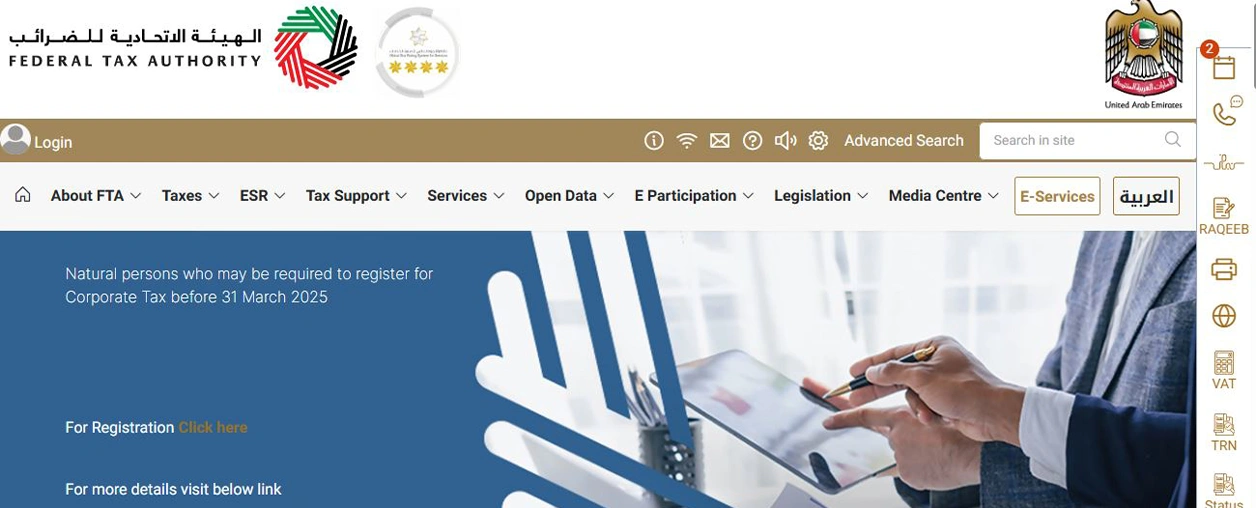
Visit the UAE Federal Tax Authority website and create an account using your registered email ID. It will give you access to the online portal for submitting your application.

Complete the application form

Log into the FTA portal and fill out the TRN application form with your company’s details. Make sure to enter accurate information and upload the necessary documents as requested.

Submit the application

Once the form is complete, submit your application for review. Ensure all documents are correctly uploaded to avoid delays.

Wait for approval

The FTA will review your application and documents. If everything is in order, they will issue your TRN. This process may take a few days, depending on the workload.

Receive your TRN

You will receive your TRN after approval.

Conclusion

By following the steps discussed in this blog, you can successfully register for a TRN and ensure your business complies with UAE tax regulations. Working with a reliable and experienced audit, tax and management consulting in the UAE, like those at Asad Abbas & Co. (Chartered Accountants), can make the process easier and faster by ensuring your TRN is registered on time.

Contact us today to streamline your TRN registration and stay compliant with UAE tax laws!

Frequently Asked Questions (FAQs)

Q1- What is the structure of the Tax Registration Number?

Ans. A TRN is a unique identification number given to businesses, which makes it easy to distinguish one business from another. Each business has its own TRN. The UAE TRN consists of 15 digits, following a specific format: 100-xxxx-xxxx-xxxx.

Q2- Who needs a Tax Registration Number?

Ans. A TRN is required in the UAE for:

  • Companies that import or export goods.
  • Sole proprietors, limited companies and partnerships.
  • Businesses that sell goods or services that are taxable.
  • Both mainland and free zone businesses.
  • Resident and non-resident companies.

Simply put, if your company is involved in selling products, services or transactions in the UAE, you must get a TRN. It is necessary no matter where your business is registered or located. Having a TRN allows you to properly file taxes with the government.

Q3- Why is the Tax Registration Number (TRN) important?

Ans. The TRN has brought important changes to how businesses operate in the UAE. It is important for the following reasons:

  • Legal requirement: Businesses must include their TRN on all tax-related documents, like VAT returns and invoices to follow the UAE tax laws.
  • Claiming tax refunds: Businesses registered for VAT can use their TRN to get refunds on VAT paid for purchases and help improve their cash flow.
  • Business transparency: The TRN helps make business transactions clear and honest. It reduces the chances of tax evasion or fraud. By checking TRNs, businesses can be sure they are working with trusted companies.
  • Tracking financial transactions: The government can track financial transactions using TRNs to ensure transparency and accountability.
  • Reputation: Having a valid TRN boosts a business’s credibility. It shows customers and partners that the business is legally registered for VAT, which helps build trust.