How to Register for Corporate Tax in the UAE: Step-by-Step Guide

Corporate tax was introduced in the UAE in 2023. According to the law, companies (both in free zones and on the mainland) whose financial year started on or after June 1, 2023, are required to pay corporate tax to the Federal Tax Authority (FTA). This has had a big effect on how businesses plan their financial years in the UAE.

The UAE follows international tax rules and standards set by the Organization for Economic Cooperation and Development (OECD). Because of this, it is very important for businesses to follow these rules carefully. One key step is completing your corporate tax UAE registration on time.

Registering for tax in the UAE officially recognizes your business with the tax authorities. It also gives you access to government services and benefits. Most importantly, it helps businesses stay compliant with the law and protects your reputation.

Understanding corporate tax registration in the UAE

Corporate tax is a type of tax that businesses in the UAE must pay on the profits they earn from their activities. It is also known as business income tax. This tax applies to most companies that have a trade license and are operating in the UAE. The amount of tax is calculated based on the net profit shown in the company’s financial statements.

However, certain adjustments may be made as per UAE tax rules. The standard corporate tax rate in the UAE is 9%, but it only applies to profits over AED 375,000. Any income below this amount is not taxed.

Also Read: VAT vs. Corporate Tax in the UAE: What Every Business Owner Needs to Know

Who must register for corporate tax in the UAE?

According to the UAE law, any person or business that is subject to corporate tax must register and get a Tax Registration Number (TRN). Failing to register for tax in UAE on time can result in a fine of AED 10,000. Here is who needs to complete corporate tax UAE registration:

Related: Understanding the Difference Between VAT Exemption Number and TRN in the UAE

Public Benefit Organizations (PBE)

Non-profit organizations, including those for science, charity, art, religion or culture, must also register if they meet the conditions. These are known as Qualifying Public Benefit Entities.

Individuals (Self-employed or Freelancers)

If you are working for yourself, own a small business or freelance under a valid trade license, and your yearly income is more than AED 1 million, you need to register. Even if you use your personal name for your work, you must still register for tax if your income crosses this amount.

Companies and legal entities

All businesses in the UAE- whether they are based on the mainland, in a free zone or even registered outside the UAE but doing business here must complete their tax registration in UAE. Free zone businesses may not have to pay the tax, but they still need to register for corporate tax.

Important documents needed for corporate tax registration in the UAE

The documents you need to submit for corporate tax registration in the UAE depend on whether you are registering as an individual or as a company.

For individuals (natural persons):

  • Valid Trade License (if you have one): Your trade license must be active at the time of registration.
  • Emirates ID or passport: A copy of your current and valid ID passport is required.

For companies (legal entities):

  • Active Trade License: The company’s trade license must be up-to-date.
  • Proof of authorization: Documents like a Power of Attorney, if needed, to show the authorized person has permission to register.
  • Emirates ID or passport of the authorized person: This is the person who is allowed to act on behalf of the company.

Note: The Federal Tax Authority (FTA) accepts documents in PDF or Word format. Each file should be no larger than 5 MB.

Simple steps to register for corporate tax in the UAE

To help you navigate the process, here is a simplified corporate tax registration guide:

Sign in to EmaraTax

Go to the EmaraTax website and log in using your account details or UAE Pass. If you are a new user, sign up to create an account.

Add your business (Taxable person)

If no business is linked to your profile yet, add your company or entity as a “Taxable Person” to move forward.

Start your corporate tax application

Click on the “Corporate Tax” tab, then select “Register” to begin the corporate tax registration process.

Read and accept the rules

Carefully read the provided instructions. Tick the box to agree to the terms and continue.

Fill in company information

Select the correct type of business (individual or company) and enter the required details like your trade license number, registration number and company type.

Add business identity details

Enter your business name, legal name in both English and Arabic and license number.

Mention your business activities

Click on “Add Business Activities” and describe what your company does as listed in your trade license.

Add owner details (if needed)

If your business has owners with 25% or more ownership, add their details here.

Include brand info (if applicable)

If your business has branches, select “Yes” and provide details of each branch.

Enter Authorised signatory details

Add information for the person who is legally allowed to sign for the business, including their Emirates ID or passport and proof of authorization.

Review everything

Double-check all the information you have entered. Confirm everything is correct and tick the box for declaration.

Submit your application

Submit your completed application. The Federal Tax Authority (FTA) will review your details and issue a Tax Registration Number (TRN) if everything is approved.

This guide shows how to register corporate tax in the UAE efficiently and correctly. The process can take up to 20 working days or longer if additional details are required.

Conclusion

All businesses running in the UAE must complete their corporate tax UAE registration to remain compliant. Following the rules set by the Federal Tax Authority (FTA) helps companies stay compliant and avoid fines.

To ensure everything is done correctly and on time, it is a good idea to speak with experienced tax consultants who understand how to register corporate tax in UAE and can advise based on your business needs. This way, you can focus on running your business smoothly under the UAE’s new tax system.

Asad Abbas & Co. Chartered Accountants brings over 25 years of trusted experience in audit, tax advisory and accounting services across the UAE. Our team of qualified professionals ensures your business meets corporate tax registration requirements with compliance and accuracy. Get in touch with us today to make your corporate tax registration UAE process stress-free and fully compliant.


Starting a Business in the Dubai, UAE: Everything You Need to Know

Dubai has become a popular and important place for business, both in the region and around the world. Its recent policy of zero income tax, along with business-friendly laws and strong political stability, makes it a very attractive place for both new and existing businesses.

However, many entrepreneurs find it hard to ignore the benefits of moving their business to Dubai, especially since it is located in such a key global position. This guide will help you understand how to open a business in Dubai. It will also highlight the main benefits of starting a business in the UAE. So, let us dive right in!

Why start a business in Dubai, UAE?

Dubai has a high population and a strong, growing economy. This creates many opportunities and promises a good quality of life. The year 2025 is considered a great time to enter the Dubai market, especially for new business owners and investors looking to start small.

Dubai also has one of the busiest airports and seaports in the world, which makes it a major international hub for trade and travel. Here are some benefits of starting a business in the UAE:

  • Quality of life: Modern infrastructure, a diverse lifestyle and good healthcare attract talented workers.
  • Low taxes: No personal or corporate income tax, only 5% VAT, which allows businesses to keep more profit.
  • Start-up support: Many incubators and accelerators offer help and resources for new businesses to succeed.
  • Strong economy: A growing company with booming sectors like trade, tourism and innovation creates a stable environment for new businesses.

These factors make Dubai an ideal place to start a business in UAE and grow successfully.

Different ways to register a business in Dubai

You can start your business in Dubai in several ways in Dubai, depending on your needs and goals. The main types of business setups include:

Starting a business in a free zone

Free zones in Dubai are special areas with their own rules for taxes, customs and ownership. A major benefit is that foreign investors can own 100% of the business. There are two main types of free zone companies: a Free Zone Establishment (FZE) for a single owner and a Free Zone Company (FZC or FZ-LLC) for two to five shareholders.

Both individuals and companies can set up either type. Since each free zone has its own rules, it is important to review the specific requirements before setting up a business in Dubai.

Mainland (Onshore) company in Dubai

A mainland company is a business set up outside the free zones managed within Dubai. Previously, foreign owners could only hold 49%, with a local partner owning 51%. Now, most mainland companies can be 100% foreign-owned.

The only exceptions are businesses in seven key sectors important to the national economy, where local ownership rules still apply. This change makes it easier for foreign investors to fully own and run companies on Dubai’s mainland. This is great for those starting a business in UAE and planning to operate within the local market.

Branch office in Dubai

A branch office is an extension of an existing company. Foreign companies can open a branch office in mainland Dubai or most of the Free Trade Zones (FTZs).

This is a good choice for businesses that want to grow and offer their products or services in the UAE market without starting a completely new company. The branch operates under the name and business activities of the parent company.

Limited Liability Company (LLC) in Dubai

A Limited Liability Company, or LLC, is a common type of business setup in Dubai. It can be formed by at least two people and can have up to 50 owners (called shareholders). Each shareholder’s responsibility for the company’s debts is limited to the amount of money they put into the business.

An LLC can operate in most industries, but it is not allowed to offer banking, financial investment services or insurance. If you are wondering how to start business in UAE, forming an LLC is one of the most flexible options.

Offshore company in Dubai

An offshore company is a type of business that is registered in Dubai but operates from outside the country. It does not carry out business activities within the UAE. These companies are fully owned by foreign investors, meaning you can have 100% ownership as a non-UAE national.

Offshore companies are mainly used for international trade, protecting wealth or holding assets, and they usually have their office or base in another country. This is suitable for those interested in starting business in UAE for global operations.

How to register a company in Dubai

Choose your business type

First, decide the type of business you want to set up. Options include a Free Zone company, a mainland (onshore) company, an LLC, a branch office or an offshore company. Your choice depends on capital, shareholders and business activities. If you are still unsure how to open a business in Dubai, consult professional business setup consultants for guidance.

Reserve a company name

Pick a unique name that follows Dubai’s rules. Check name availability with the Dubai Economic Department (DED) of the Free Zone Authority. The name must be respectful, match your business type and avoid using names of authorities or religions.

Get a business license

Apply for a license based on your business activities. There are three main types: Commercial (trading), Professional (services) and Industrial (manufacturing).

Select your office location

Choose and lease or buy office space based on your business needs and budget. Free zones offer various office sizes.

Open a bank account

After registration, open a corporate bank account to manage your company’s finances. It is a required step when you start your business in Dubai.

Documents needed to register a company

You will need the following documents to start business in UAE:

  • The company’s Memorandum of Association and Articles of Association.
  • Information about the company’s share capital.
  • Copies of passports for all shareholders and directors.
  • A recent bank statement, credit card statement or utility bill showing the name and address of the shareholders and directors.
  • A signed and certified contract appointing the company or service provider.
  • Copies of national ID cards for shareholders and directors.
  • A board resolution with details about setting up a branch or subsidiary and naming the authorized manager.

These documents help prove the identity of the owners and directors, explain the company’s structure and confirm official approvals needed for registration. Having all these ready will make setting up a business in Dubai faster and easier.

Also Read: How to Select the Best Audit Firm in Dubai for Your Business

The bottom line

Starting a business in the UAE might seem like a long process, but it can be done in just a few weeks if you do it right. Dubai’s location and strong economy, combined with its forward-thinking government policies make it a special place to start and grow a business.

This makes it a great opportunity for entrepreneurs to move ahead with their plans. For more details and consultation on how to set up a business in Dubai, reach out to Asad Abbas & Co. Chartered Accountants today!

How to Verify TRN in UAE and Why It’s Crucial for Your Business

The tax system in the United Arab Emirates (UAE) has changed a lot in recent years. Since VAT was introduced in 2018, all businesses that need to pay VAT must have a special number called a Tax Registration Number (TRN). Verifying a TRN is very important because some businesses might try to collect VAT without actually being registered.

This kind of fraud can lead to financial losses for the government. To prevent this, the UAE government has made it easy for people to check and confirm if a TRN is valid. This blog will guide you through what a TRN is and how you can check a VAT registration number in the UAE.

What is a TRN in the UAE?

In 2018, the UAE government introduced a 5% Value Added Tax (VAT) on goods and services to help increase national income and rely less on oil. To manage this system, the Federal Tax Authority (FTA) gives each VAT-registered business or person a special number called a Tax Registered Number (TRN).

Each registered business gets its own unique TRN. This 15-digit number helps the FTA keep track of who is registered and monitor all taxable transactions. Moreover, the TRN helps the government identify one VAT-registered business apart from another and is used to make sure companies follow the VAT laws. It also helps spot businesses that are not following the tax rules properly.

Also Read: Understanding the Difference Between VAT Exemption Number and TRN in the UAE

Why is a TRN important in the UAE?

The TRN certificate in Dubai is a key part of the VAT (Value Added Tax) system in the UAE. It serves several important purposes that help businesses follow the law and build trust.

Claiming VAT back on purchases

A TRN is needed if a business wants to get back the VAT it paid on goods or services. Also, checking the TRN of suppliers helps businesses confirm they are dealing with registered and legal vendors. This makes it easier to claim input tax properly under VAT rules.

Building trust and good reputation

Showing a valid TRN builds trust with customers, suppliers and partners. It shows that the business is properly registered, follows VAT rules and takes its responsibilities seriously. This ultimately boosts its professional image.

Following the law

Businesses that are registered for VAT must include their TRN on all official documents like contracts, invoices and letters related to taxable transactions. If a business does not show a valid TRN, it can face fines and penalties from the Federal Tax Authority (FTA).

Ensuring clear and honest dealings

Having a TRN brings more openness and trust to business transactions. It helps stop tax fraud and illegal activity. By verifying TRNs, businesses make sure they are working with honest and VAT-compliant partners.

Why is verifying a TRN in the UAE so important?

Verifying a tax registration number in the UAE is important for both businesses and customers. It helps make sure that you are following VAT rules and protects you from dealing with unregistered or fake companies. Here are some main reasons why VAT number verification matters:

Protect against fraud 

Checking TRNs helps prevent fraud like tax evasion, fake invoices or illegal business deals. Ensuring a TRN is real can protect your company from losing money and getting involved in legal problems.

Claim VAT on purchases

If you want to claim VAT back on business purchases, your supplier must have a valid TRN. By checking their TRN first, you make sure your business can legally recover input tax and follow VAT rules.

Avoid fines and legal trouble

If you do not validate VAT number of your suppliers or business partners, you might end up working with a non-compliant company. This can lead to penalties or fines from the Federal Tax Authority (FTA) for breaking VAT laws.

Confirming the business is legal

When you confirm VAT number, you confirm that the business is officially registered for VAT. This gives you confidence that they are operating legally and can take part in taxable transactions in the UAE.

Related: The Ultimate Guide to Applying a Tax Registration Number (TRN) in the UAE

How to check a TRN in the UAE?

You can easily verify VAT number online through the Federal Tax Authority (FTA) website. Just follow these simple steps:

Step 1: Go to the FTA website

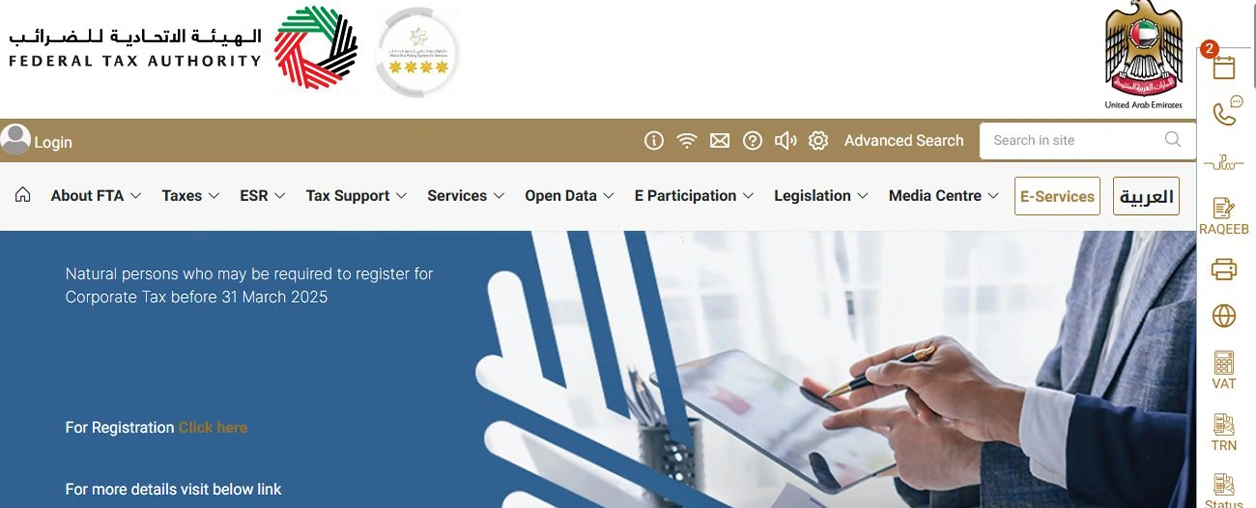
Visit the official FTA website: https://tax.gov.ae/en/default.aspx. On the right-hand side of the page, click on the ‘TRN’ icon to start the process.

Step 2: Type in the TRN

Enter the 15-digit TRN you want to check. Make sure the number is correct to avoid any mistakes.

Step 3: Click to check VAT registration number

Once you have entered the number, click the “verify” or “submit” button. The system will check the TRN with the FTA’s database to confirm if it is valid.

How tax agents help with TRN verification

Tax agents play an important role in the UAE by helping businesses with TRN-related tasks. They make the process of getting a Tax Registration Number (TRN) quick and smooth. In addition, tax agents also help check if a TRN is valid to ensure both the seller charging VAT and the buyer paying VAT are properly registered. It helps businesses stay compliant and avoid any VAT-related issues.

Conclusion

Whether you are a business owner checking a new supplier or a customer wanting to confirm a company’s details, verifying the TRN is an important step when doing business in the UAE. Knowing how VAT works and getting the right advice can help you stay within the law and avoid problems.

Asad Abbas & Co. Chartered Accountants has strong knowledge of VAT laws in the UAE and can guide you with expert advice to help your business stay compliant. Our team of qualified professionals handles your VAT needs with care to give you peace of mind. We also ensure you claim all the VAT refunds you are eligible for, which can save your business money.

By working with us, you can be confident that your business is following VAT rules correctly. So, if you have any questions about your TRN number or VAT registration, do not hesitate to contact us for the best Value Added Tax Service in UAE! Our expert team is ready to assist you every step of the way.

How to Calculate VAT in UAE: A Complete Guide for Businesses

The United Arab Emirates (UAE) started charging Value Added Tax (VAT) on January 1, 2018, with a standard rate of 5%. This tax was introduced to help the country earn money from different sources and not depend only on oil. VAT is a type of tax on spending added at each step in the supply chain, from making a product to selling it to the final customer.

All businesses in the UAE must register for VAT. If they do not, they could face big fines from the Federal Tax Authority (FTA). Since VAT affects all businesses and calculating VAT is something businesses do regularly, it is essential to understand how to calculate it correctly.

This blog shows how is VAT calculated so that businesses can stay compliant and manage their finances properly.

What is VAT (value added tax)?

VAT is a tax on goods and services that is added at each step of making and selling a product. This means that the buyer pays VAT, and the seller collects it. For example, when a manufacturer buys raw materials, VAT is added. Later, when the finished product is sold by a retailer to the customer, VAT is added again.

In the UAE, businesses collect VAT on behalf of the Federal Tax Authority (FTA). Today, over 150 countries around the world use the VAT system. To understand how VAT works, it helps to know these three main terms:

  • Input VAT: It is the VAT a business pays when it buys goods or services. This amount can usually be claimed back.
  • Output VAT: This is the VAT a business adds when it sells goods or services to its customers.
  • VAT liability: This is the amount the business must pay to the FTA, calculated as: Output VAT – Input VAT.

Also Read: VAT vs. Corporate Tax in the UAE: What Every Business Owner Needs to Know

How to calculate VAT in UAE?

Use this simple VAT calculation formula to find out how to calculate VAT tax in the UAE:

VAT to pay = VAT on sales – VAT on purchases

Example for VAT on purchases (Input VAT):

If a business buys items worth AED 150 and the VAT rate is 5%, the VAT paid on this purchase is AED 7.50 (150 × 5%)

Examples of VAT on Sales (Output VAT):

If the business sells items for AED 300 at the same 5% VAT rate, the VAT collected from the customer is AED 15.00 ((300 × 5%).

Final VAT payable:

Subtract the VAT on purchases from the VAT on sales to find the VAT you owe:

AED 15.00 (Output VAT) – AED 7.50 (Input VAT) = AED 7.50 (VAT to be paid).

How to work out your VAT payment?

If you are registered for VAT, you can calculate how much VAT to pay by subtracting the VAT you paid on purchases (input VAT) from the VAT you collected on sales (output VAT).

Formula:

VAT to pay = Output VAT – Input VAT

Keep a record of both your input and output VAT for the tax period. Once you have those amounts, use the formula above.

If your output VAT is more than your input VAT, you will need to pay the difference. On the other hand, if your input VAT is more than your output VAT, you do not have to pay anything and may get a refund.

Typical VAT situations and examples

  • Sales within the UAE: Most products and services sold in the UAE are charged 5% VAT.
  • Selling goods outside the GCC: Exports to countries outside the GCC are taxed at 0% VAT. You do not charge VAT, but you can still claim back the VAT you paid on related expenses.
  • Special free zone areas: Some free zones are treated as outside the UAE for VAT rules. In these areas, certain transactions are not subject to VAT.

VAT registration rules and responsibilities

  • When you must register: If your business makes taxable sales over AED 375,000 in a year, you must register for VAT.
  • Optional registration: If your sales are between AED 187,500 and AED 375,000, you can choose to register, but it is not required.
  • What you need to do after registering: Once registered, you must keep proper records, file VAT returns every quarter and pay VAT on time.

Frequent VAT errors and tips to prevent them

  • Mistakes in VAT calculation: Always use the right VAT rate and formula to avoid paying too much or too little.
  • Wrongly categorizing sales: Not knowing the difference between exempt, standard-rated and zero-rated items can cause mistakes in VAT charges.
  • Poor record keeping: Keep clear and complete records of all your sales and purchases to support your VAT reports and claims.

Fines for not following VAT rules

You may face heavy fines if you do not follow VAT rules. Some common mistakes include incorrect VAT return filing, registering late or not paying VAT on time. Penalties can start from AED 500 for small mistakes and go up to three times the VAT amount for serious issues.

How to manage VAT effectively

  • Stay informed: Keep up with the latest VAT rules and updates from the FTA to avoid mistakes.
  • Get expert help: Consider hiring VAT professionals or using accounting tools to ensure your VAT calculations are correct and you stay compliant.
  • Keep good records: Do not forget to document all transactions properly. This is important for audits and to support your VAT claims.

Contact us today to get professional help with VAT calculation

Understanding how to calculate value added tax can be tricky, especially since it is a new tax in the UAE. However, if you want to avoid costly mistakes and penalties from the FTA, it is important to get accurate VAT calculations. Unsure about the numbers?

Do not worry! Our VAT experts at Asad Abbas & Co. Chartered Accountants are here to help. We help ensure your calculations are correct and your business stays compliant. So, what are you waiting for? Reach out to us today for assistance with VAT calculations!

Business Setup Cost in Dubai: Complete Guide to Starting a Company in the UAE

Are you considering starting a business in Dubai? If so, you are not alone! Dubai has become one of the top destinations for entrepreneurs and investors worldwide. The good news here is that business setup cost in Dubai today is more affordable than ever.

The UAE government continues to reduce the cost of setting up a business in Dubai to attract more businesses and create a thriving economy. This makes it easier for new business owners to take their first steps without being burdened by high initial expenses.

The business setup consultants at Asad Abbas & Co. Chartered Accountants are here to help business owners like you navigate the entire business setup process with ease. This ensures that you won’t face any unexpected costs and can start your dream business in the UAE without any hassle.

In this blog, we will break down the business setup Dubai cost and cover the expected expenses before and after your company is established so you can plan accordingly. So, let us begin!

Understanding the business environment in Dubai

Dubai has become a global business hub thanks to its strategic location, business-friendly policies and modern infrastructure. Entrepreneurs and companies from around the world are drawn to Dubai for its growing economy and vast opportunities.

If you are planning to start a business in Dubai, it is essential to understand the cost of setting up a company in Dubai. Knowing these setup costs is crucial for anyone looking to establish a business in the UAE. Moreover, a clear understanding of the business setup cost in Dubai and the required steps can help you save both time and money.

Before you look into the details of  UAE business setup cost, it is important to understand that Dubai has different business zones, each with its own set of rules, regulations and cost structures. These zones include Free Zones, Mainland and Offshore.

  • Free zone companies: Great for businesses that focus on international trade. They offer benefits like 100% foreign ownership and tax exemptions.
  • Mainland Companies: Perfect for those who want to do business directly with the local UAE market without restrictions.
  • Offshore Companies: Best for businesses that want to operate outside the UAE or act as holding companies. They offer advantages like tax benefits and privacy.

Your choice of business zone will play a big role in determining both your registration costs and the flexibility of your operations.

Cost of setting up a business in Dubai

The UAE business setup cost depends on several factors, including the type of business, the location, the license required, and more. In some cases, you can get a business license for as low as AED 12,900. Generally, the cost to register a company in Dubai ranges from AED 15,000 to AED 28,000. However, the cost may increase if you need special permits or privileges.

For example, if you require a foreign trading name or government approval, these factors can raise the overall cost. You can consult with the experts at Asad Abbas & Co. Chartered Accountants to ensure you do not pay more than necessary. We will offer you the best business setup services in UAE and guide you through the process to ensure you stay within your budget.

Four main costs when setting up a business in Dubai

Company registration fee

The company registration fee is a one-time cost paid to the free zone authority when you first set up your company. The exact fee depends on your company’s legal structure and the free zone you choose.

License fee

Choosing a business license is an important step when setting up your company in a Dubai-free zone. The three most common types of licenses are for trading, services and industrial businesses. Unlike the one-time company registration fee, the license fee is an annual cost, typically ranging from AED 10,000 to AED 50,000 per year.

Office rental fee

You need to rent office space to obtain your business license in Dubai. Each free zone in Dubai offers different types of office setups, such as serviced desks, flexi-desks and smart desks, with prices typically ranging from AED 15,000 to AED 20,000.

Share capital

The required minimum share capital varies across different free zones, ranging from as low as AED 1,000 to as high as AED 1,000,000, depending on the type of business and the licenses you need. On average, the share capital requirement in most free zones in Dubai is around AED 50,000.

Additional expenses

Several other costs can impact the total investment needed to register a company in Dubai:

Professional fees

Hiring business setup consultants, accountants and legal experts can provide valuable support but will add to the setup costs. These fees can range from a few thousand AED to tens of thousands, depending on the complexity of your business and its ongoing needs.

Compliance and approvals

Some businesses may require additional approvals, compliance and certifications with specific regulations, which can add extra costs during the planning stage.

Visa costs

You will need to obtain a visa for yourself, your employees and your dependents. It includes expenses for processing, medical tests and Emirates ID registration.

Insurance

Depending on your business, you may need various types of insurance, such as worker’s compensation, property insurance or liability. The costs will vary depending on the level of coverage and the risks involved.

How can you reduce costs when starting a business in Dubai?

Managing business setup Dubai cost effectively and planning strategically is essential for a smooth business setup in Dubai. Here are some tips to help:

  • Do your research: Make sure you understand the specific costs related to your chosen business type and location.
  • Get expert advice: Hiring experienced business setup consultants can help you save money when starting your business in Dubai. Therefore, consult with business setup specialists to help you navigate the registration process and identify ways to save on costs.
  • Create a flexible budget: It is important to have a detailed budget that includes all potential costs. Do not forget to set aside extra funds for unexpected expenses to ensure your business stays financially stable in the early stages.

Asad Abbas & Co. Chartered Accountants is a top consultancy firm in Dubai known for providing the best business setup services in UAE. We can simplify the process and ensure your business follows all local regulations while keeping your setup costs low.

Our experts offer customized solutions to help you negotiate better office space deals and share useful strategies to save money throughout the setup journey. Get in touch with us today to start your business setup in Dubai with ease and confidence!

Also Read: Why Every Business in the UAE Should Consider a Financial Audit

Why Every Business in the UAE Should Consider a Financial Audit

Most businesses in the UAE are small and medium-sized enterprises, and these companies are an essential part of the country’s business environment. However, many of these businesses face challenges when it comes to managing their finances. Financial audits for small businesses in Dubai can help address these issues effectively.

With multiple tasks being handled by different companies, mistakes are common, which can cause errors in financial operations. A financial audit, conducted with the support of an audit provider like Asad Abbas & Co. Chartered Accountants can help businesses avoid such problems and handle their finances more efficiently.

An audit is a critical process for any business in the UAE. It involves reviewing the financial records and documents to ensure everything is in order. The audit requirements in UAE vary depending on whether the company is based in the mainland or a free zone.

Despite its importance, many companies in the UAE believe that conducting an audit is unnecessary for their business. If you are one of those companies, this blog is for you! Here, we will discuss the top reasons why you should consider conducting a financial accountability audit in the UAE.

The importance of auditing for businesses in the UAE

Here are the main reasons why auditing is important to meet the auditing standards in the UAE:

Ensuring accuracy in financial records

Larger companies often have professional accountants to manage their financial records. However, small and medium-sized businesses may not always have access to the same level of expertise. This can make it harder for them to ensure their financial records are accurate and properly evaluated.

Therefore, conducting a company audit in the UAE can help guarantee that financial records are accurate and comply with the country’s accounting standards. During this process, professional auditors carefully review a business’s internal controls and financial reports. In addition, they offer helpful advice on fixing any financial errors and improving internal processes for better financial management.

Preventing fraud

Audits are valuable tools that can help companies detect and prevent fraud. A Financial Accountability Audit helps auditors spot any weaknesses in a company’s financial records. This reduces the risk of errors or fraud. Moreover, company audits can uncover signs of fraudulent activities, such as fake transactions, misused funds, or other irregularities.

Detecting fraud early allows businesses to take necessary actions to reduce risks and protect their stakeholders’ interests. Without regular audits, fraud might go unnoticed. Therefore, it is crucial to perform these audits to maintain financial honesty and security.

Securing a loan

A company audit in Dubai can also help you secure a loan. Lenders and financial institutions often require audited financial statements as part of their process to verify a company’s financial health. Companies in the UAE can increase their chances of obtaining funding and loans by having their financial records audited.

Ensuring legal compliance

Companies in the UAE must comply with the country’s auditing standards, which include the requirement for financial audits. One of the main reasons for conducting a company audit is to ensure that businesses are following the rules and regulations set by the UAE government.

The leading audit firms in Dubai, such as Asad Abbas & Co. Chartered Accountants show their commitment to maintaining business compliance by carrying out regular audits. This also helps build trust and confidence among investors in the company.

Improve internal controls

After reviewing a company’s financials, auditors then evaluate the internal control systems in place. The best audit firms in Dubai ensure that the current internal control procedures are being followed and, if necessary, recommend better ways to manage finances.

This helps prevent fraud and theft. In addition, auditors identify any weaknesses in the company’s setup and suggest necessary changes before issues become bigger problems.

Meeting global standards

The UAE is rapidly becoming a key hub for international trade that attracts global investors and multinational companies. The government has made audits for small businesses in Dubai mandatory to ensure businesses comply with both UAE auditing standards and international financial reporting guidelines.

This helps align the UAE with the best practices worldwide, which, in turn, boosts the country’s competitiveness and increases its chances of attracting international investment.

What are the audit requirements in UAE?

Companies must maintain proper records of their financial transactions to carry out a complete and accurate audit. According to the Commercial Companies Federal Law, No.32 of 2021, businesses in the mainland UAE are required to keep these records for at least five years. The financial statements that are audited must follow the International Financial Reporting Standards (IRFS) or other accounting standards approved by the UAE Ministry of Economy.

As stated in Article 27 of Chapter 2 of the same law, every company must hire a licensed auditor who is registered with the Ministry of Economy to audit their financial records. The auditor hired for this task must follow the auditing rules set by the UAE Auditing and Accounting Organization (AAO).

Is audit mandatory for all companies in UAE?

Companies in the free zones are not always required to undergo audits or submit audit reports. However, certain entities, such as Free Zone Companies (FZCO) and Free Zone Establishments (FZE), must have mandatory audits. Even if a free zone does not require the submission of an audit report, the company may still need to prepare one.

The audit report could be required in the future for purposes like immigration. With the UAE’s tax system becoming more active, companies are finding it increasingly important to keep their accounting records and audits in order. This helps businesses gain a clearer understanding of areas that need improvement and how to address them moving forward.

Final thoughts

It is clear that the UAE has established laws regarding the auditing of company financial statements. There are specific requirements for an audit for companies, which provide many benefits when followed by well-managed businesses.

Therefore, companies operating in the UAE should consider hiring certified auditors. Using professional and licensed auditors like Asad Abbas & Co. Chartered Accountants ensure the best audit services and compliance with the necessary standards.

Asad Abbas & Co. Chartered Accountants offer expert advice that can help you with effective auditing solutions. We also provide high-quality auditing services, backed by our team of experienced professionals. If you want to understand more about why audits are required for companies in the UAE, please feel free to contact us today!

Understanding the Difference Between VAT Exemption Number and TRN in the UAE

Adhering to the Value Added Tax (VAT) law is one of the key compliance requirements businesses operating in the UAE face. Introduced in 2018, VAT is a tax applied to most goods and services. As part of this system, businesses are required to register for VAT if their taxable supplies and imports exceed a specific threshold.

However, the terms related to VAT registration can be confusing. Two important terms in the UAE VAT system are the VAT Exemption Number and the Tax Registration Number (TRN). In this blog, we will explain these terms and highlight the differences between them. So, let us begin!

What is VAT?

Before we dive deeper into the blog, it is important to understand what VAT is. VAT, or Value Added Tax, is a tax that businesses collect on behalf of the government. It is charged on the value added to goods and services at each stage of production or distribution.

Businesses that are registered for VAT must charge VAT on their sales and can claim back any VAT they paid on business-related purchases. VAT is managed by the Federal Tax Authority (FTA) in the UAE. Businesses that meet certain requirements need to register with the FTA to collect and pay VAT.

Once registered, these businesses are issued a tax registration number (TRN), which acts as their unique identifier for VAT purposes.

Also Read: VAT vs. Corporate Tax in the UAE: What Every Business Owner Needs to Know

What is the tax registration number (TRN)?

The tax registration number (TRN) is a unique number assigned to a business once it has successfully registered for VAT with the FTA. This number is used to identify the business for tax purposes and is necessary for compliance with the UAE VAT law. Here are some key features of TRN number:

Unique identifier

The VAT number is a unique number given to each business that registers for VAT. Businesses need to have a TRN to operate legally and follow VAT regulations.

Required for tax filings

Businesses must include their VAT tax number when filing their VAT returns so the FTA can track and verify their tax obligations.

Invoicing

When businesses issue invoices, the TRN number must be shown on the invoice to confirm the transaction under UAE VAT law.

VAT payment and refunds

The VAT number is crucial when businesses are making VAT payments or claiming VAT refunds. It is used by the FTA to track VAT transactions and ensure that businesses are adhering to the law.

Related: The Ultimate Guide to Applying a Tax Registration Number (TRN) in the UAE

Who needs a TRN number?

If the taxable sales and imports of your business are more than AED 375,000, you must register for VAT and get a VAT registration number (TRN). Even if your sales are below this amount but above AED 187,500, you can still choose to register for VAT voluntarily.

What is the VAT Exemption Number?

While the TRN number is a standard registration number for VAT-registered businesses, the VAT Exemption Number is a special identifier for businesses or individuals who are exempt from VAT. This number is given to those who do not need to charge or collect VAT on their goods or services. Here are some key features of the VAT exemption number:

Special exemption

The VAT exemption number is provided to businesses or individuals who qualify for an exemption under UAE VAT law. Examples include educational institutions, healthcare providers and certain government organizations.

No VAT registration needed

Businesses with a VAT exemption number do not need to register for VAT because they do not have to charge VAT on their goods or services. However, this does not mean they are completely outside VAT rules; they just do not need to collect VAT on their transactions.

Exemption criteria

The exemption typically applies to specific categories of supplies or services, which may include non-taxable goods or services. The UAE VAT law lists these exemptions, and businesses that meet the requirements can apply for a VAT exemption number from the FTA.

Not for regular businesses

The VAT exemption number is not a substitute for the TRN for regular businesses. It is an exemption for those who do not meet the criteria to be VAT-registered but still need to have a formal exemption status.

Who needs a VAT exemption number?

VAT exemption number is typically required for businesses or individuals who are exempt from VAT because of the type of services they offer. For example:

  • Educational institutions providing educational services may qualify for exemption.
  • Healthcare providers offering medical services may be exempt from VAT.
  • Certain government entities and international organizations may also be exempt.

What are the key differences between the VAT exemption number and VAT tax number (TRN)?

Both the VAT exemption number and the TRN are related to VAT, but they serve different purposes and apply to different situations. The TRN is used by businesses that are registered for VAT, typically those whose taxable supplies exceed that VAT registration threshold of AED 375,000. These businesses must collect and remit VAT on taxable supplies and include their TRN on invoices.

They are also required to file regular VAT returns with the Federal Tax Authority (FTA). On the other hand, the VAT exemption number is issued to businesses or individuals who are exempt from VAT, meaning they are not required to collect VAT on their supplies. This exemption usually applies to specific sectors like education, healthcare and certain government entities.

Businesses with a VAT exemption number do not need to file VAT returns but may need to submit documentation related to their exemption status. While businesses with a TRN must follow all VAT requirements, those with a VAT exemption number are not required to issue VAT-registered invoices, though they may still issue invoices for other purposes.

When to apply for the TRN or VAT exemption number?

VAT exemption number

If your business provides services or goods that fall under the VAT exemption category, such as healthcare or education, and you are not required to charge VAT on your supplies, you can apply for a VAT exemption number.

TRN

If your business’s taxable supplies exceed AED 375,000 annually, you must apply for VAT registration and obtain a TRN. This process is mandatory for most businesses operating in the UAE.

In conclusion, the VAT registration number (TRN) is for businesses that must charge VAT, while the VAT exemption number is for those exempt from VAT. If unsure which applies to your business, consult a VAT expert at Asad Abbas & Co Chartered AccountantsContact us today for assistance with your VAT-related queries and compliance needs!

How to Select the Best Audit Firm in Dubai for Your Business

Hiring an audit firm in Dubai can greatly improve your business and streamline financial audits. Many companies today outsource their audit and accounting tasks to professional firms. It helps them address financial challenges, meet legal requirements and make the most of their current business environment.

In addition, investors, regulatory bodies, banks, stakeholders and shareholders depend on audited financial statements to confirm a company’s transparency, reliability and accountability. Since audits are a crucial part of any business and involve handling sensitive financial data, it is important to choose the right audit company in Dubai.

Outsourcing auditing services in Dubai to a trusted audit firm ensures your business is managed professionally. However, before selecting the top audit firm in Dubai, you must consider some key factors. In this blog, we will explore what to keep in mind when choosing an audit firm in UAE. So, let us get started!

What are the advantages of working with the best auditing companies in Dubai?

Check out the list below to see the benefits of hiring the top audit firm in Dubai:

Reducing tax costs

With the new VAT and corporate tax laws in the UAE, effective tax planning is more important than ever. An audit firm can help you lower your tax expenses legally while ensuring compliance with the rules.

Affordable services

By choosing auditors in Dubai, you can save money compared to hiring accounting firms in other countries. Opting for service packages that include more than just audit and assurance, such as tax, payroll, consulting, compliance, business setup and technology consulting, makes it even more cost-effective.

Ensure compliance with accounting standards

Dubai has strict rules to maintain transparency and fairness. A top audit firm in Dubai will always follow the latest regulations to ensure your business transactions, accounting processes and paperwork meet the required standards. It will also help prevent costly fines or legal issues.

Effective financial planning

A top chartered accountant firm offers more than just compliance; they provide valuable advice on cost management, investment opportunities and financial forecasting to help businesses make smart and informed decisions.

What factors should you remember when selecting an audit firm in Dubai?

Search for the best audit firms in Dubai

Begin by identifying accounting firms in UAE that offer services in Dubai. You can search online or ask for recommendations from trusted sources like industry professionals, business advisors and your network.

Some free zones in Dubai require audits to be performed by approved auditors. In such cases, you should select from the list of approved auditors provided by the free zone authority.

Assess experience and skills

When looking for top accounting firms in Dubai, focus on their experience and expertise. Pick firms that are known for their reliability, high-quality services and honesty. Moreover, make sure the firm is skilled in areas like tax planning, risk management, compliance and internal audits in Dubai.

Industry-specific expertise

Since accounting services can vary by sector and each industry has its own financial needs, choosing a firm familiar with your field will give you more customized and effective solutions. That is why you should check if the firm has experience in your industry and has handled companies like yours.

Firm reputation and client feedback

After narrowing down your list of top audit firms in Dubai, it is important to do thorough research. Look for details that show the firm’s reliability. The reputation of auditing firms in Dubai is an important factor when choosing an audit firm. It can give you a good idea of how trustworthy and effective they are.

Look for reviews and feedback from clients to understand how well they perform and if their clients are happy. A good firm will have positive comments and be well-known for its quality service in the industry. In addition to this, you can also request references from the firm and talk to their current clients to understand their level of satisfaction.

Look at the services offered

Apart from auditing, audit firms in Dubai offer a wide range of other services. These include financial advice, business setup, tax consulting, and more. Therefore, you should assess your business needs and identify which additional services could be useful.

Choose an audit firm that provides the right support and help for your business. This way, all your accounting needs can be handled by one firm.

Verify certifications and qualifications

To ensure the audit firm maintains high standards of professionalism, check their certifications and accreditations. Look for auditors who are Chartered Accountants (CAs), Certified Public Accountants (CPAs) or have other relevant qualifications.

Besides this, it is also important that they have local accreditation from UAE regulatory authorities. These certifications show their expertise and commitment to industry standards.

UAE regulations

Make sure the accounting firm follows all the UAE laws and regulations, including local financial reporting and tax rules. Staying compliant is essential to avoid legal problems and ensure your business operates properly within the UAE’s regulatory system.

Technology and tools in accounting

Today’s businesses need modern solutions. The top audit firms in UAE use advanced accounting software and tools to offer real-time insights and automate routine tasks. Choose a firm that uses up-to-date accounting software, as this helps ensure fast, accurate and efficient financial reporting.

Conclusion

Dubai is known as a global business hub that offers a great environment for companies and entrepreneurs to grow. However, understanding the complex financial and regulatory rules in the UAE can be challenging.

This is where a good audit firm can be extremely helpful. Whether you are a startup, a small business or a large corporation, selecting the right financial partner is crucial for your success.

Asad Abbas & Co. (Chartered Accountants) is one the best audit firms in Dubai known for its reliable and professional auditing services. Contact us today to see how we can help you achieve your business goals!

VAT vs. Corporate Tax in the UAE: What Every Business Owner Needs to Know

The UAE is a popular destination for businesses looking to set up operations, but it has its own set of rules and regulations. As a business owner, it is important to understand the local laws, including the taxes your company must pay while operating in the UAE.

Two key taxes that businesses in the UAE need to be aware of are corporate tax and VAT. These taxes are crucial for generating revenue, but they work in different ways and impact the economy and society. In this blog, we will explain what these taxes are and highlight the difference between VAT and tax. So, let us get started!

Understanding VAT and corporate tax in the UAE

To understand the main differences between VAT tax in UAE, let us first explain what each tax means according to the law:

  • VAT (Value-Added Tax): This is a tax placed on the sale and import of goods and services at every step of the supply process, including when goods are supplied within the country. Essentially, it applies whenever goods or services are bought or sold.
  • Corporate tax: This tax is charged on the income or profits that a business makes. It applies to the earnings of companies and other legal entities.

Simply put, value added tax UAE is a tax on the sale and purchase of goods and services throughout the supply chain. Corporate taxation in UAE, on the other hand, is a tax on the income a business earns.

Corporate tax

Businesses in the UAE did not have to pay corporate tax in the past, but this is changing. The UAE government has introduced a federal tax on business profits. On December 9, 2022, the Federal Tax Authority issued the Corporate Tax Decree Law.

The purpose of this new tax is to shift the UAE’s economy away from relying mainly on oil and towards other sources of income. By investing in technology and innovation and introducing a corporate tax, the government is creating a more diversified economy. This tax will help increase the country’s revenues beyond just oil profits.

Corporation tax UAE is based on the profits of a business. The standard corporate tax rate in Dubai is 9% for businesses that make more than AED 375,000 in profit. The tax does not directly affect customers but applies to the business’s profits.

The corporate tax applies to all business activities across the UAE, except the following:

  • Companies involved in natural resource extraction are taxed by the emirates where they operate.
  • Individuals earning personal income, such as salaries or investment profits, are not required to pay corporate tax.
  • Businesses in free zones are exempt from the corporate tax.

Here is what you need to know about the new corporation tax UAE rates:

  • A 0% tax rate applies to taxable income up to AED 375,000.
  • A 9% tax rate applies to taxable income above AED 375,000.
  • Multinational enterprises (MNEs) under the OECD’s BEPS 2.0 rules will be subject to additional tax guidelines.

In addition to these exemptions, the corporate taxation in UAE law also includes further exclusions, such as:

  • Dividends earned from UAE companies.
  • Profits from transactions within a company group.
  • Dividends earned from foreign companies.
  • Profits from group reorganizations.

This new tax system is part of the UAE’s strategy to diversify its economy and reduce reliance on oil.

Value Added Tax (VAT)

Value added tax UAE is a tax on the consumption of goods and services. It is charged at each step of production and distribution. VAT is widely used around the world, and over 150 countries have adopted it. In the UAE, VAT was introduced on January 1, 2018, at a rate of 5%.

For businesses, like logistics companies, value added tax in UAE affects cash flow because they must collect tax on their sales and offset it with the tax paid on their purchases. VAT is a general tax on consumption, meaning it applies to most goods and services. Businesses must register for VAT if their taxable sales and imports exceed AED 375,000.

If a business operates in a UAE-free zone, its transactions are not subject to VAT and are tax-free. Before VAT, the UAE only had taxes on specific industries, like oil & gas and banking, which did not affect all businesses. However, VAT has now impacted every business in the country and has changed the business environment.

At the end of each tax period, businesses registered for VAT must submit a VAT return to the Federal Tax Authority (FTA). This tax provides the government with extra revenue to fund its various projects and initiatives.

While value added tax UAE is applied to most goods and services, some products and services are exempt or charged at a 0% rate. These include:

  • Bare land
  • Some financial services (as outlined in value added tax in UAE legislation)
  • Residential properties
  • Local passenger transport

Simply put, value added tax in UAE is a tax businesses charge on goods and services, with some exemptions for specific sectors. It is ultimately paid by customers and directly affects them by raising the prices of goods and services in the UAE. Although the VAT rate is 5%, tourists can claim back 85% of the VAT they paid on products purchased in the UAE.

What are the key differences between VAT and corporate tax?

Points of Distinction VAT Corporate Tax
Nature of tax Consumption-based tax Profit-based tax
Who pays the tax Paid by customers for goods and services Paid by companies on their profits, affecting shareholders, customers and employees
Calculation method Calculated by adding value at each stage of production Calculated on the profits a company makes
Tax filing and payment Businesses charge VAT and remit it to the FTA Companies file taxes and pay on their profits
Tax collection Collected at each stage of the supply chain; businesses charge VAT on sales and reclaim VAT on purchases Paid by businesses annually based on their taxable income
Impact on pricing VAT is added to the final price of goods and services, affecting the final price directly Corporate tax does not directly affect pricing but can influence pricing strategies through cost management and profit margins

Conclusion

VAT and corporation tax UAE are important for generating government revenue. Both businesses and consumers need to understand how these taxes affect the economy and society. By understanding the points discussed in this blog, we can better see how each tax shapes the UAE’s economic environment.

At Asad Abbas & Co. (Chartered Accountants), we are proud to be your trusted guide in managing taxes and accounting in the UAE. Our team of experts is well-versed in UAE tax laws and regulations, and we offer customized solutions to meet your needs. Partner with us today and see the difference for yourself!

The Ultimate Guide to Applying a Tax Registration Number (TRN) in the UAE

Innovation is driving the world forward, and many enterprises have already established their businesses in the UAE. As a business owner in the UAE, it is important to follow local tax laws. The UAE tax system has changed a lot in recent years. Since the introduction of Value Added Tax (VAT) in 2018, businesses must have a unique identifier called a Tax Identification Number Dubai.

This number helps the authorities keep track of your business for tax purposes. Without a TRN, your business could face fines, delays or even be unable to operate. That is why it is important to register for one.

If you are an entrepreneur unsure about how taxes work in the UAE, worry not. We have got the answers! In this blog, we will discuss what is TRN number and how to apply for tax identification number. So, let us begin!

What is a UAE Tax Identification Number?

Dealing with taxes can be tough, especially since compliance is mandatory, and even small mistakes can result in penalties. In the UAE, getting a Tax Registration Number (TRN) is more than just a formality.

It is a crucial requirement for businesses to legally operate under the Value Added Tax (VAT) system. Without a TRN, businesses cannot issue VAT invoices, claim tax refunds or meet the regulations set by the Federal Tax Authority (FTA).

A tax identification number Dubai is a special code given to businesses for identification purposes. To get this number, a company must first be legally registered. When you register for VAT, the Federal Tax Authority in the UAE will provide a 15-digit TRN that identifies your business. This number allows the FTA to track and manage taxable transactions more effectively and is also needed for various official documents.

The business receiving this number is called the “registrant”. Once registered for VAT, the TRN will be automatically assigned to you. However, applying for a TRN can feel overwhelming as many businesses face challenges with unclear eligibility rules, errors in the application process and complex documentation.

What documents are needed for TRN registration?

You need to submit several documents to relevant authorities for verification to apply for a TRN. This includes your registered email ID for portal access and key company documents like your trade license, articles of association and memorandum. Below is a list of additional documents typically required:

  • Passport copy and Emirates ID of the owners or shareholders.
  • Copy of the power of attorney, passport, and Emirates ID of the manager or authorized person, along with their mobile number.
  • Company contact information and address.
  • Company bank account details.
  • Import or export documents (if applicable).
  • Company turnover declaration letter.
  • Supporting documents for your company’s revenue.
  • Sample invoiced from suppliers and customers.
  • Projected future revenue details with supporting documents like confirmed purchase orders.

How to apply for tax identification number in the UAE?

Applying for a UAE tax identification number is a straightforward process. All you need to do is follow these steps to complete your registration:

Prepare the necessary documents

Gather the required documents that we discussed in the blog above before starting your application.

Create an account on the FTA portal

Visit the UAE Federal Tax Authority website and create an account using your registered email ID. It will give you access to the online portal for submitting your application.

Complete the application form

Log into the FTA portal and fill out the TRN application form with your company’s details. Make sure to enter accurate information and upload the necessary documents as requested.

Submit the application

Once the form is complete, submit your application for review. Ensure all documents are correctly uploaded to avoid delays.

Wait for approval

The FTA will review your application and documents. If everything is in order, they will issue your TRN. This process may take a few days, depending on the workload.

Receive your TRN

You will receive your TRN after approval.

Conclusion

By following the steps discussed in this blog, you can successfully register for a TRN and ensure your business complies with UAE tax regulations. Working with a reliable and experienced audit, tax and management consulting in the UAE, like those at Asad Abbas & Co. (Chartered Accountants), can make the process easier and faster by ensuring your TRN is registered on time.

Contact us today to streamline your TRN registration and stay compliant with UAE tax laws!

Frequently Asked Questions (FAQs)

Q1- What is the structure of the Tax Registration Number?

Ans. A TRN is a unique identification number given to businesses, which makes it easy to distinguish one business from another. Each business has its own TRN. The UAE TRN consists of 15 digits, following a specific format: 100-xxxx-xxxx-xxxx.

Q2- Who needs a Tax Registration Number?

Ans. A TRN is required in the UAE for:

  • Companies that import or export goods.
  • Sole proprietors, limited companies and partnerships.
  • Businesses that sell goods or services that are taxable.
  • Both mainland and free zone businesses.
  • Resident and non-resident companies.

Simply put, if your company is involved in selling products, services or transactions in the UAE, you must get a TRN. It is necessary no matter where your business is registered or located. Having a TRN allows you to properly file taxes with the government.

Q3- Why is the Tax Registration Number (TRN) important?

Ans. The TRN has brought important changes to how businesses operate in the UAE. It is important for the following reasons:

  • Legal requirement: Businesses must include their TRN on all tax-related documents, like VAT returns and invoices to follow the UAE tax laws.
  • Claiming tax refunds: Businesses registered for VAT can use their TRN to get refunds on VAT paid for purchases and help improve their cash flow.
  • Business transparency: The TRN helps make business transactions clear and honest. It reduces the chances of tax evasion or fraud. By checking TRNs, businesses can be sure they are working with trusted companies.
  • Tracking financial transactions: The government can track financial transactions using TRNs to ensure transparency and accountability.
  • Reputation: Having a valid TRN boosts a business’s credibility. It shows customers and partners that the business is legally registered for VAT, which helps build trust.